Watering Cannabis in Coco: How to Do It Right to Maximize Yield
Watering is the single most important factor that separates an average grow from an exceptional one when cultivating cannabis in coco coir. You can have elite genetics, powerful lighting, and premium nutrients—but if your irrigation strategy is wrong, your yields will never reach their full potential.
Unlike soil, coco works as a hydroponic system. The plant depends 100% on what it receives at every irrigation event. That’s why learning how to water cannabis properly in coco is what truly unlocks its performance.
Using coco with a well-managed irrigation system can realistically increase yields by around 20%. This is not marketing hype—it’s a consistent, proven result. Regardless of the nutrients you use, if you master irrigation, production improves dramatically. Together with lighting, investing in irrigation and learning how to use it correctly is what pushed my cultivation to the next level.
Why Irrigation Is So Important When Growing in Coco
In coco, every watering event fulfills four critical functions:
-
Feeds the plant with nutrients
-
Oxygenates the root zone
-
Flushes accumulated salts from the substrate
-
Regulates hormonal activity through dryback, depending on the growth stage
If any of these fail, the root system stops working efficiently and the cannabis plant enters stress—even if it still looks healthy on the outside.
Coco should not be watered when it is completely dry, nor simply “on schedule.” It must be irrigated when the substrate reaches the correct dryback point, allowing the roots to reactivate properly.
What “Watering Properly” Really Means in Coco
At Netadrip, we see irrigation as a control lever for steering the crop. This article is introductory, but irrigation becomes truly decisive for advanced growers, especially those using crop steering techniques.
Watering correctly in coco is not about pouring water until runoff appears. It means applying a balanced nutrient solution, at the right moment, with the right volume, creating a controlled runoff and allowing an appropriate dryback before the next irrigation.
That runoff is not wasted water. It is what keeps coco clean, stable, and productive. This brings us to a key concept:
Drain to Waste (Runoff at Every Irrigation)
Drain to waste means that each irrigation generates 10–20% runoff, which exits the pot and is removed.
This practice allows you to:
-
Eliminate accumulated salts
-
Maintain a stable substrate EC
-
Prevent nutrient lockout
-
Renew the solution surrounding the roots
In coco, not generating runoff is one of the most common mistakes and the number one cause of invisible problems that limit yield.
In the Netadrip coco guide, we go deeper and provide specific target values for dryback percentages and runoff volumes.
How Often Should You Water Cannabis in Coco?
There is no single correct frequency, but there is a clear rule:
👉 Water when the coco has partially dried—not when it is soaked or completely dry.
In practice:
-
Vegetative stage: usually 1 irrigation per day
-
Flowering stage: 1 to 3 irrigations per day, depending on pot size and plant demand
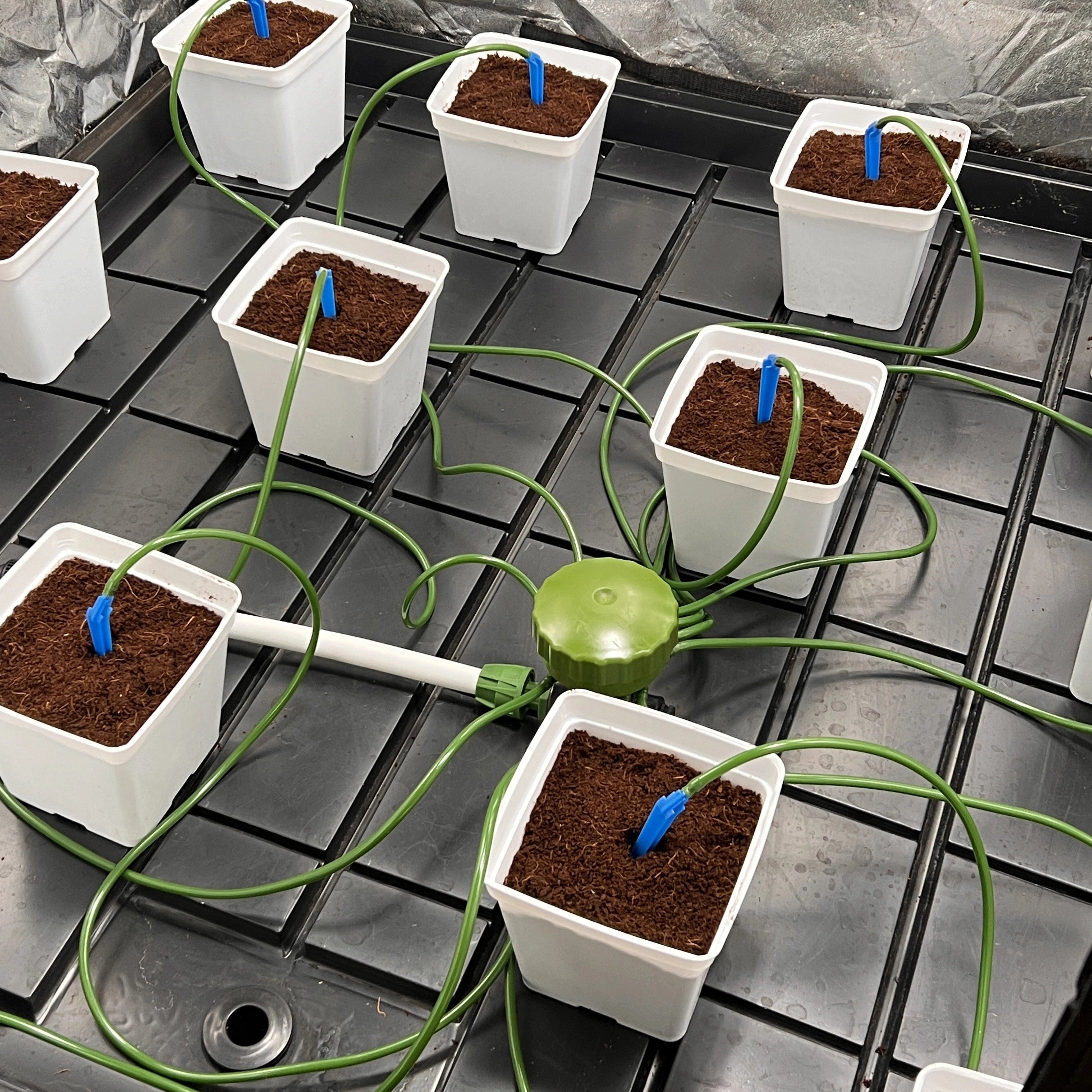
We typically use relatively small pot sizes, which allow multiple drybacks per day and therefore multiple irrigation events. This is one of the keys to pushing plants to their maximum potential.
What matters is not how many times you water, but that each irrigation produces runoff and that a dryback occurs before the next one. Many small irrigations without runoff only cause salt buildup and eventually slow down the crop.
Why Drip Irrigation Is the Best Option for Coco
Coco performs best when irrigation is:
-
Slow
-
Uniform
-
Repeatable
-
Precise
For this reason, drip irrigation is the most efficient way to water cannabis in coco.
Compared to hand watering:
-
Water is distributed evenly
-
Channeling is avoided
-
You know exactly how much you apply
-
Multiple daily irrigations become easy and reliable
This consistency is essential for growers focused on performance.
Automated Irrigation for Cannabis in Coco
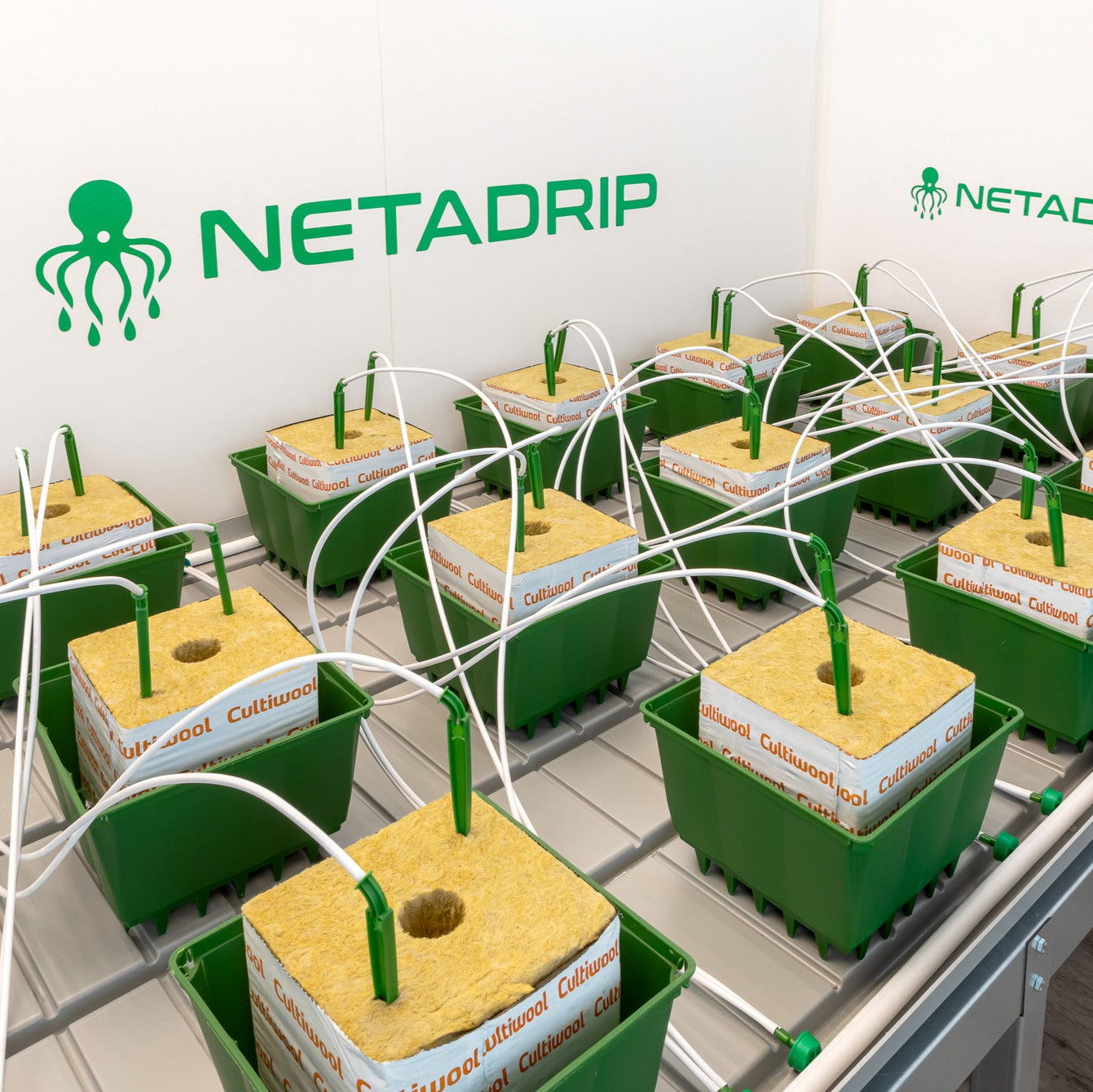
Automated systems like Netadrip Hydra allow you to apply fertigation consistently, controlling flow rate and timing without relying on human error.
This is especially important in coco, where small repeated mistakes quickly become major problems. Automation brings stability, repeatability, and peace of mind.
What Happens When Irrigation Is Incorrect
Poor irrigation management in coco leads to:
-
Salt accumulation
-
Nutrient lockout
-
Stressed root systems
-
Plants that fail to bulk properly
-
Irregular and inconsistent yields
Many growers respond by increasing nutrient strength, thinking the plant is hungry—when in reality, the roots are unable to absorb nutrients due to an unbalanced substrate.
How to Know If Your Coco Irrigation Is Correct
Some clear signs that your irrigation strategy is working:
-
Cannabis plants drink consistently
-
Leaves are firm and pointing upward
-
Continuous, steady growth
-
Clear and stable runoff
-
No burnt tips or unexplained deficiencies
When the plant responds positively to irrigation, it means the root system is operating in a healthy environment.
Conclusion
Irrigation is the true engine of cannabis cultivation in coco. Once you understand runoff, frequency, dryback, and water distribution, coco becomes one of the most productive and predictable growing systems available.
Mastering irrigation doesn’t just prevent problems—it is what allows you to maximize yield, quality, and consistency in every harvest.
If you want to go deeper into advanced irrigation strategies and professional coco management, you can download the complete guide developed by the Netadrip team.