Coco vs soil for cannabis – differences, benefits and when to choose each
One of the most common questions among growers is whether it’s better to grow cannabis in coco or soil.
The short answer is simple: both systems can deliver excellent results, but they offer very different levels of control.
Soil usually provides more margin for error and a more relaxed approach. Coco, on the other hand, allows much greater control over irrigation, nutrients and plant development. That’s why more and more growers looking for stability, uniformity and higher yields are switching to coco cannabis growing.
Growing cannabis in soil: a more forgiving system
Soil has long been the natural entry point for many growers. It’s a living medium with organic matter and a certain ability to buffer mistakes in watering and nutrition.
That’s its main advantage: it’s more forgiving.
- Retains moisture for longer
- Stores part of the nutrients
- Requires less daily precision
In small grows or for less experienced growers, this often translates into easier management.
But this tolerance comes with a trade-off:
It reduces control. Changes take longer to show, corrections are slower, and fine-tuning is more limited.
Growing cannabis in coco: more control, more oxygen, faster response
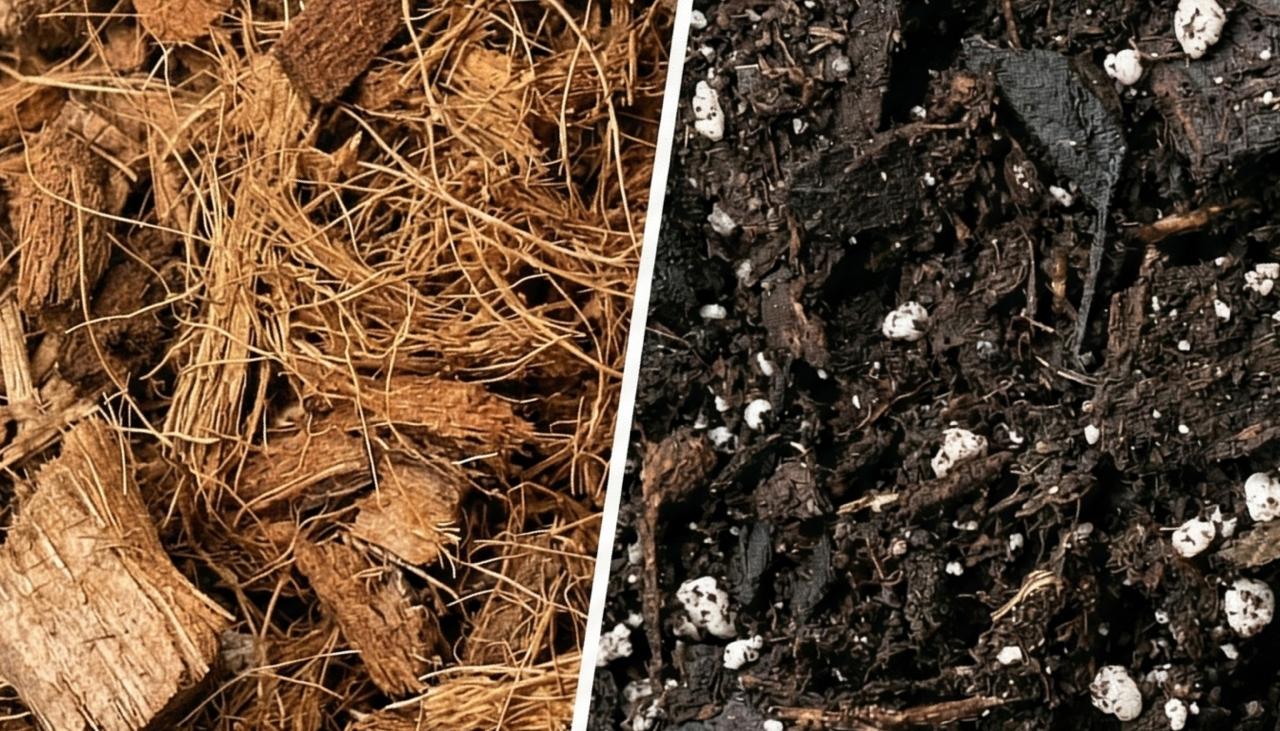
Coco doesn’t behave like soil, even if it looks similar.
It’s an inert, highly aerated medium, much closer to hydroponics. In other words, when growing cannabis in coco, almost everything depends on how you irrigate.
That’s not a drawback — it’s actually the main advantage.
Coco allows much more direct control over the root zone. Its high aeration promotes healthier, more active roots, and it responds quickly to adjustments in irrigation and nutrition.
It’s also worth noting that, when managed correctly, coco can outperform soil by around 20–25% in yield.
That’s why coco isn’t watered “when it looks dry”, but with intention, frequency and a clear irrigation strategy.
The key difference: control vs simplicity
If your priority is a more relaxed grow with more room for error, soil still makes sense.
If you’re looking for precision, uniformity and full control over the crop, coco offers much more potential.
In practice, this results in three clear advantages:
1. More oxygen in the root zone
Coco has a much more open structure than soil. This increased air content promotes more active roots and faster development.
2. Faster and more uniform growth
Because coco reacts more quickly to changes, a well-executed strategy usually leads to more uniform growth and faster plant response.
This is especially useful when aiming for consistency across pots and repeatable grow cycles.
3. More precise irrigation and nutrition
In soil, part of the nutrition comes from the substrate itself.
In coco, everything comes through the nutrient solution.
This allows for much more precise control — as long as your cannabis irrigation system in coco is reliable.
Which one yields more?
When both systems are well managed, coco usually has higher yield potential.
Not because it’s “better”, but because it offers a more oxygenated and controlled environment.
A well-managed coco grow can outperform soil by around 20–25%.
But here’s the key point:
👉 Coco only delivers that advantage when irrigation is done properly.
A core principle:
Treat coco like soil, and you’ll get soil results. Treat it like a hydroponic medium, and you’ll unlock its full potential.
Irrigation changes everything
This is the real turning point.
In soil, you can water manually and less frequently and still get good results.
In coco growing, you need:
- Frequent irrigation cycles
- Controlled drainage
- Uniform distribution
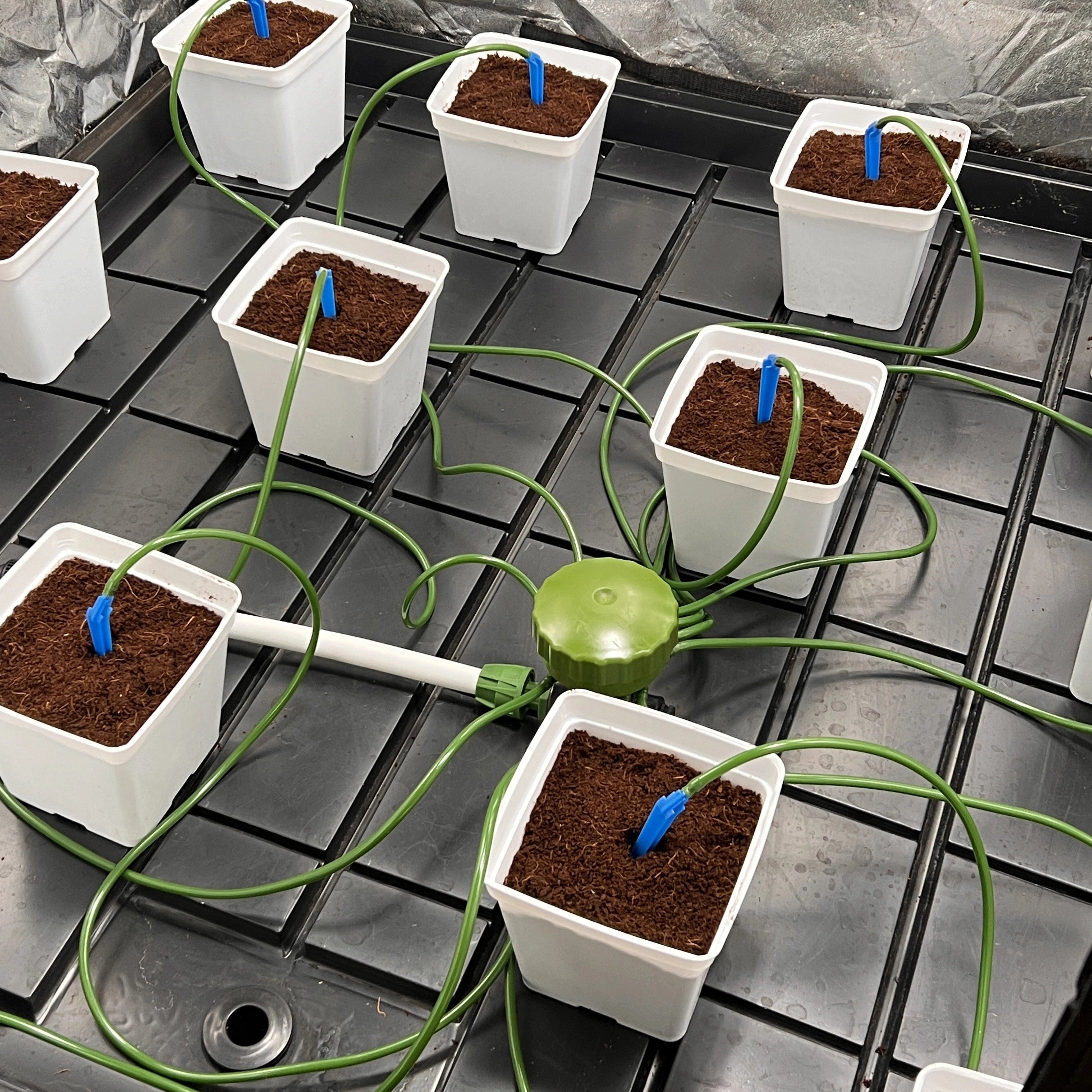
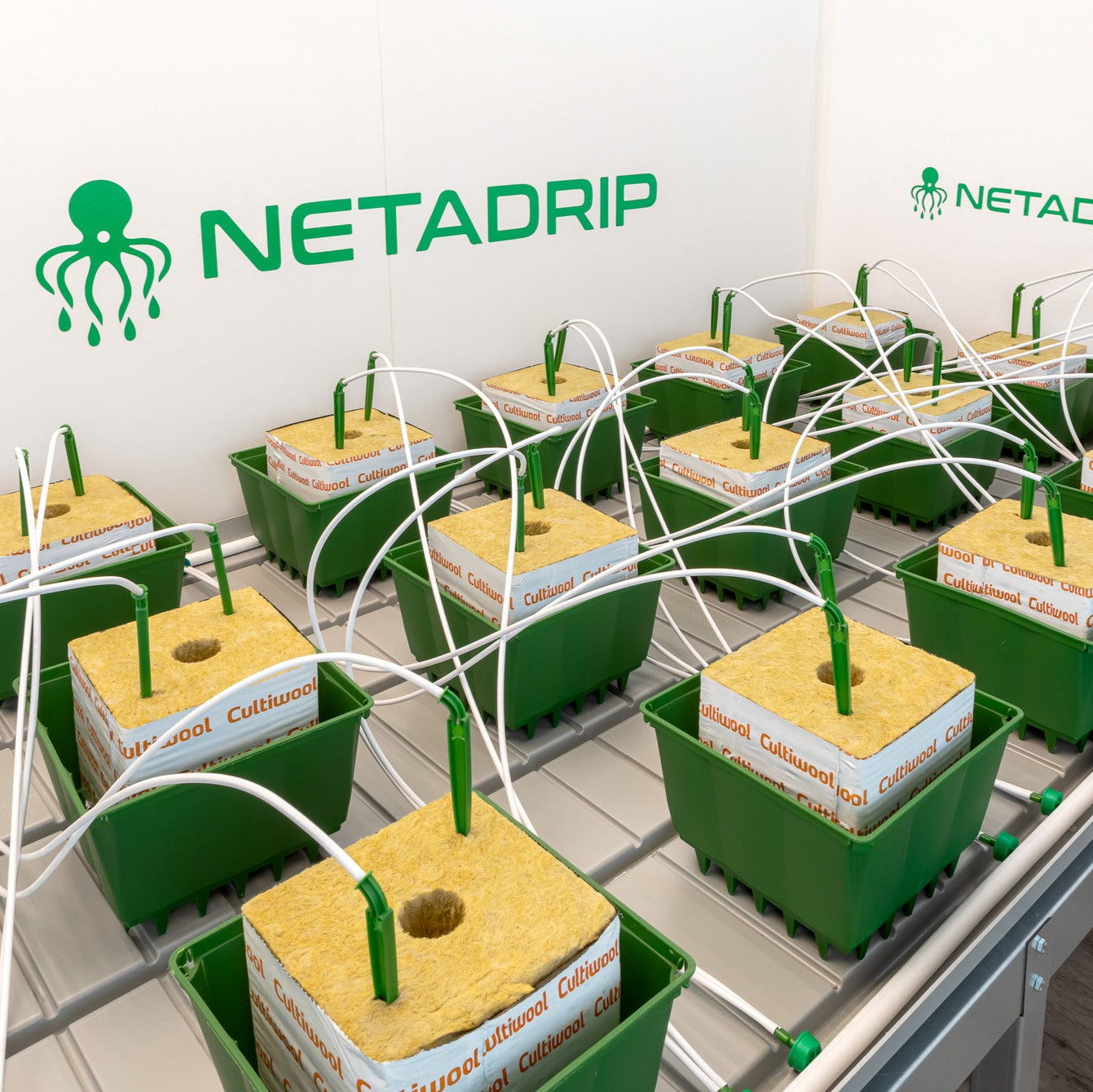
That’s why coco performs best with drip irrigation systems.
Systems like the Netadrip Hydra kit provide:
- Consistent flow rate
- Uniform water distribution
- Mobile control
- Ability to apply strategies like Drain to Waste
What about beginners?
It depends on the type of beginner.
If someone is looking for simplicity and less technical demand, soil is usually the easiest option.
But if the goal is to understand irrigation from the start and build a stronger technical foundation, coco can also be a great choice.
It’s not necessarily harder — it just requires more attention to what really matters.
When to choose soil
Soil may be the better option if:
- You want a simpler grow
- You don’t want to rely on frequent irrigation
- You prefer more margin for error
When to choose coco
Coco is usually the better choice if:
- You want more control over nutrition and growth
- You’re looking for more uniform results
- You want to automate irrigation
- You aim to increase yield and consistency
Conclusion
It’s not about saying soil is bad or coco is always better.
It’s about understanding what kind of grow you want.
Soil is more forgiving.
Coco is more precise.
Soil can be a great way to start.
Coco, when managed correctly, is a powerful tool for growers who want to take things to the next level.
And when combined with a precise irrigation system, the improvement is even greater.
Because in a serious grow:
irrigation isn’t a detail — it’s the foundation of everything.
📘 Download the coco growing guide

Written by Netadrip Marketing