EC and pH in cannabis cultivation: a complete guide to controlling nutrition (2025)
Controlling EC and pH is one of the cornerstones of technical cultivation: they determine how the roots absorb nutrients and, consequently, the health and yield of the plant. In inert substrates like coco coir, where "everything depends on irrigation," mastering these parameters makes cultivation a predictable system.
What is the EC and why does it matter?
EC (electrical conductivity) measures how many salts (nutrients) are dissolved in your irrigation solution.
Low EC → deficiencies and slow growth.
High EC → osmotic stress, burnt tips and blockages.
In coco coir, EC is a precision tool: you can work with slightly higher levels as long as there is drainage and good weather ( VPD ).
pH: the guardian of availability
Even if the solution contains "everything," when the pH is out of range, certain ions (Ca, Mg, Fe, etc.) become unavailable, leading to invisible deficiencies. Adjust and calibrate the meter regularly; record values throughout the entire cycle.
NER: the nutritional balance within the substrate
It introduces a key concept for thinking like a technical horticulturist: NER (Nutrient Equilibrium Ratio) , the dynamic balance between nutrients available in the substrate. It's not just "how much" there is, but in what proportion they are (just like you read 20-10-10 as 2:1:1).
When the NER (Net Energy Reduction) is disrupted—due to uneven accumulation, an excess of one cation blocking another, or poor drainage—plant growth is stunted even with "more" fertilizer. Drainage is the practical tool for maintaining the NER.
Substrate EC vs irrigation EC vs drainage EC
- EC for irrigation: the one you prepare in the tank.
- EC of substrate: the “language” that the roots feel; it depends on what enters and what you evacuate with drainage.
- Drainage EC: what comes out of the pot; your reflection of the substrate.
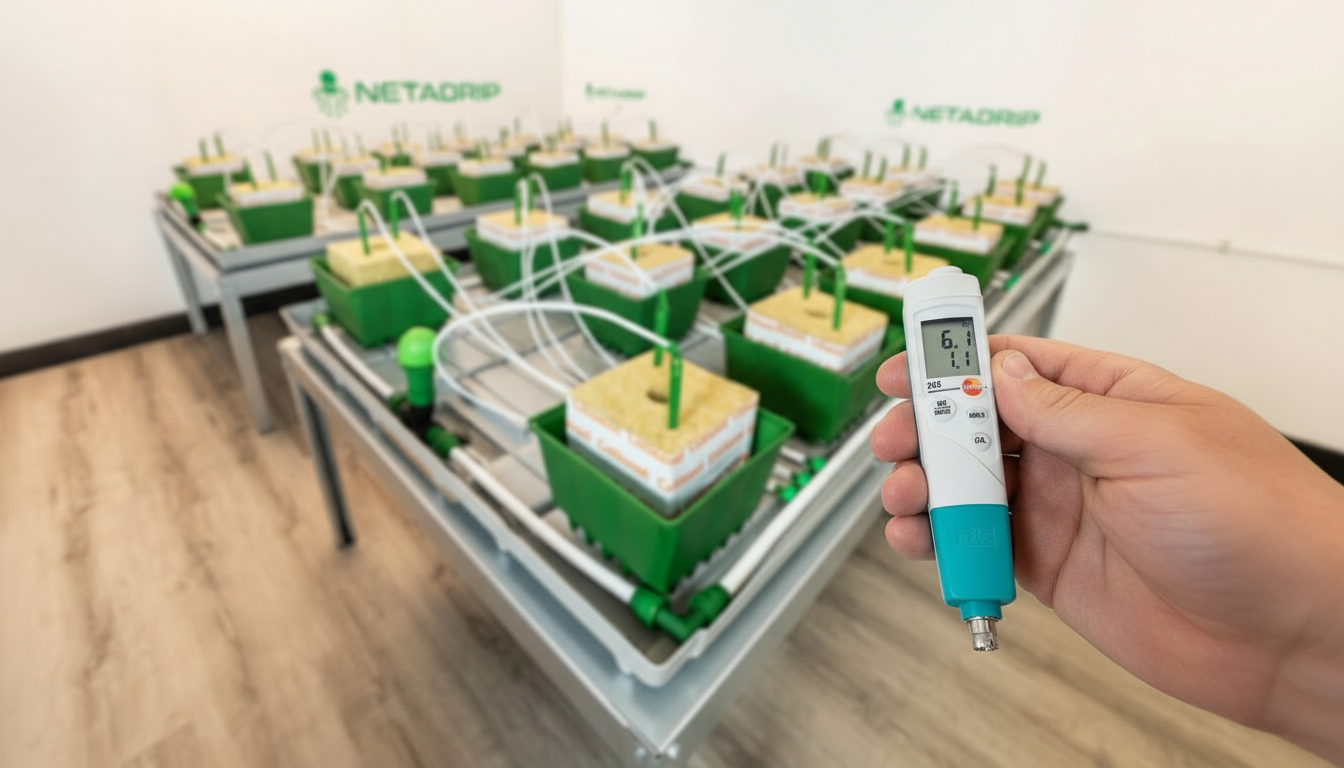
Measuring it regularly tells you if salts are accumulating ( EC drainage ↑ ) or if you are over-washing ( EC drainage ↓ ).
Practical objective: to keep the drainage EC consistent with your strategy.
How to measure drainage EC (step by step)
- Water until 10–20% drainage (DTW) is obtained.
- Discard the first few milliliters (they may carry salts from the surface).
- Collect a representative sample from the last third of the event drainage and measure its EC and pH.
- Record irrigation EC vs drainage EC throughout the week to detect trends.
Drainage: the operating lever to control the EC of the substrate
Working in Drain-to-Waste (DTW) —always watering with fresh solution and letting it drain— applies fresh nutrients, removes accumulated salts, oxygenates the root, and maintains the NER.
Tip: Never leave drainage in the saucer; the pot will reabsorb it through capillary action.
Benefits of drainage with each watering
- EC of the substrate under control and stable pH.
- Fewer blocks and fewer aggressive mid-cycle flushes.
- Greater tolerance for small errors and higher yield per plant.
Practical ranges by phase (reference)
| Phase | EC (mS/cm) | pH |
|---|---|---|
| Cutting/rooting | 0.4–0.6 | 5.5–5.8 |
| Vegetative onset | 0.8–1.2 | 5.8–6.0 |
| Active growth | 1.2–1.6 | 5.8–6.0 |
| Pre-flowering (stretch) | 1.6–1.8 | 5.9–6.2 |
| Mid-flowering | 1.8–2.2 | 6.0–6.3 |
| Final flowering | 1.4–1.6 | 6.2–6.4 |
| Final wash | <0.4 | 6.0–6.5 |
Note: It is not the "high" EC value that is damaging, but rather a root unable to absorb water in a saturated environment. With proper VPD and continuous drainage, EC values of 2.8–3.0 can be managed in certain phases.
VPD and CE: an inseparable pair
VPD regulates how much water (and nutrients) the plant moves. With optimal VPD, the plant transpires and absorbs nutrients; with an incorrect VPD, even if the EC is correct, it doesn't absorb water, salts accumulate, and the substrate's EC rises. If you want to work with higher ECs, ensure optimal VPD first.
Common mistakes (and how to correct them)
-
Watering without drainage → raises substrate EC, causes blockages.
Solution: Ensure 10–20% actual drainage. -
Dishes with drainage → reabsorption of “dirty water”.
Solution: evacuate drainage. -
High EC without climate → wilting with moist substrate.
Solution: lower EC or correct VPD/drainage. -
Neglected pH → “phantom” deficiencies.
Solution: calibrate and record.
Proper flushing in coconut
In coco coir, do not flush with water alone: this causes osmotic shock and cation imbalance. Perform a gradual flush with a dilute solution (approximately 20–25% of your flowering EC) at a stable pH, repeating until the runoff EC approaches the flush EC. Keep the coco coir active (without drying it out completely).
Implement it precisely (Hydra)
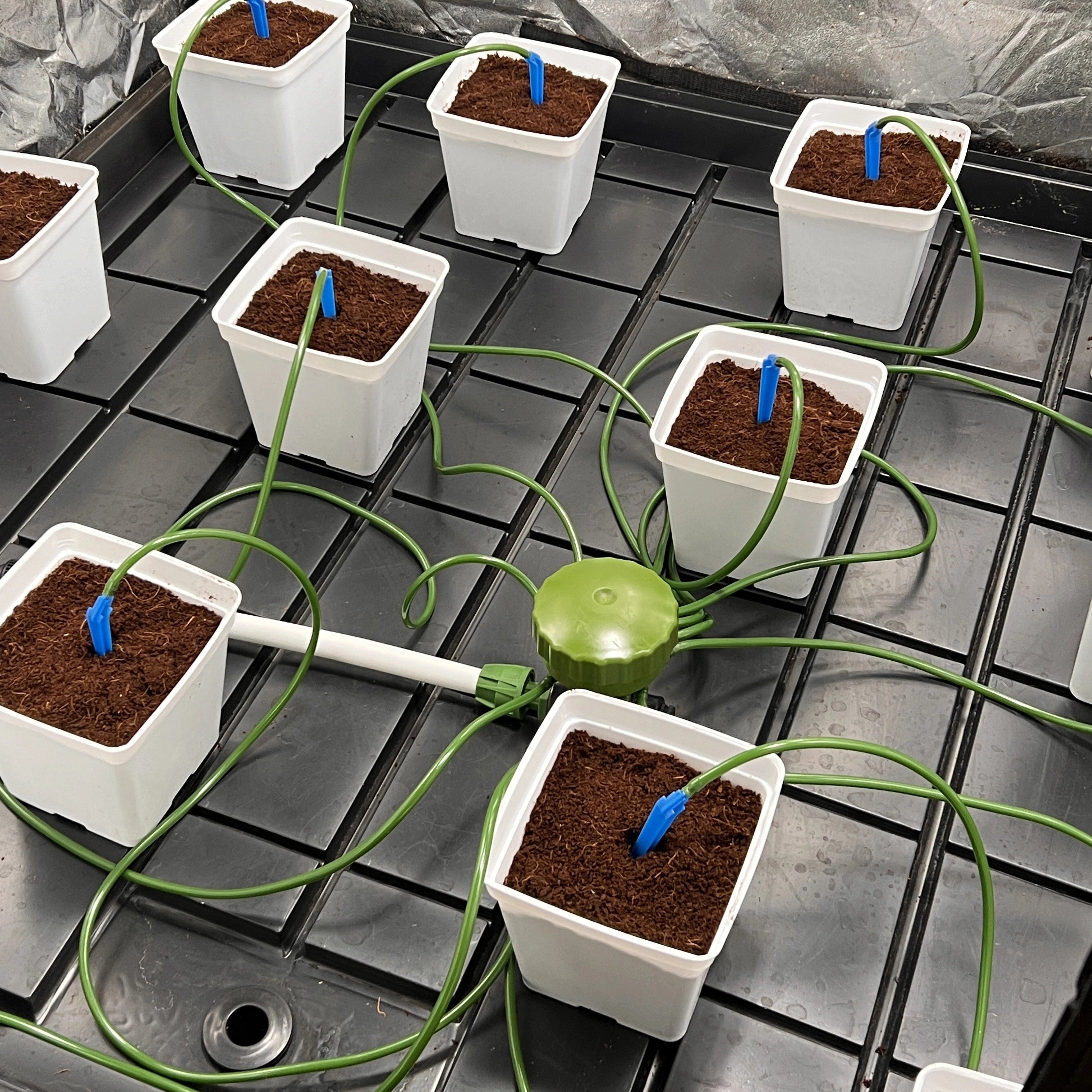
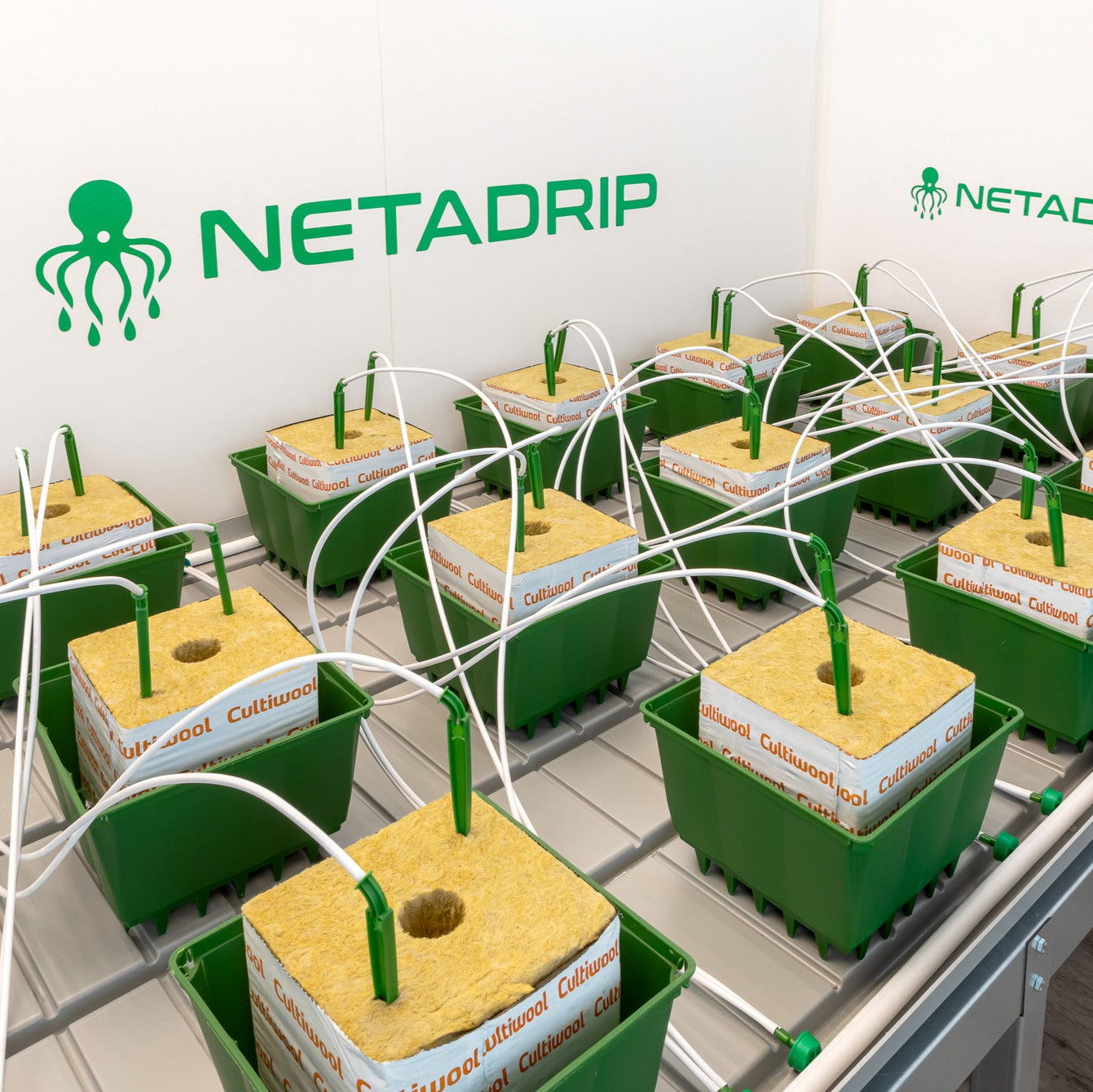
With a system like Hydra you can program constant pulses, homogenize the dripping and always repeat the same drainage percentage; this way you control the EC of the substrate precisely and avoid channeling.
Operational summary
- Fertilize with every watering and aim for 10–20% actual drainage (DTW).
- Measures and records irrigation EC and drainage EC; adjusts before problems arise.
- Think about NER: more important than “raising CE” is maintaining balance.
- Adjust VPD if you want to work with high EC in pre-flowering/mid-flowering.
- In advanced flowering, gradually reduce the EC of the substrate for quality and cleanliness.

Written by Ricardo Mosquera Lopez