Crop Steering in Coco: Using Irrigation to Control Cannabis Growth
When a grower masters the basics of irrigation and understands how to keep coco substrate stable, a new question naturally arises:
👉 Can irrigation be used to guide the behavior of cannabis plants?
The answer is yes.
This approach is known as crop steering.
Instead of simply watering plants correctly, crop steering uses irrigation as a strategic tool to influence whether cannabis plants prioritize vegetative growth or flower development.
What Is Crop Steering in Coco Cultivation?
Crop steering is a cultivation methodology designed to influence plant physiology through controlled adjustments in the root zone environment.
Coco substrate is particularly effective for this technique because it responds quickly to irrigation changes, allowing growers to fine-tune plant behavior.
The core concept is simple:
-
Adjust when you irrigate
-
Adjust how much water you apply
-
Control how the root zone behaves between irrigation events
These adjustments influence how the plant develops throughout its lifecycle.
Vegetative vs Generative Steering
Crop steering typically operates through two main strategies.
Vegetative Strategy
The goal of vegetative steering is to promote plant expansion, leaf development, and root growth.
It is characterized by:
-
More consistent root-zone hydration
-
Lower root stress
-
Increased plant structure and biomass
This strategy is commonly used during early growth stages or when plants need to increase in size.
Generative Strategy
Generative steering focuses on stimulating flower production.
Growers intentionally introduce controlled variations in root-zone moisture, triggering hormonal responses linked to flowering.
Typical results include:
-
Shorter internodes
-
Higher flower density
-
More compact plants
This strategy is often applied during flowering phases to maximize yield and bud quality.
Multi-Irrigation as a Crop Steering Tool
Many growers assume that multiple irrigations per day are simply about delivering enough water.
In crop steering, however, the goal is different.
👉 Each irrigation event helps regulate the physiological rhythm of the cannabis plant.
Not all irrigation events serve the same purpose:
-
Some activate plant metabolism
-
Some maintain root-zone stability
-
Others prepare the plant for the next growth cycle
This is why irrigation timing becomes critical when applying crop steering techniques.
How to Start Applying Crop Steering (Without Overcomplicating)
Advanced sensors can be helpful, but they are not required to begin experimenting with crop steering.
Some practical starting points include:
-
Observe how plants respond when irrigation frequency changes
-
Monitor whether growth becomes more vertical or more compact
-
Adjust gradually instead of making sudden changes
Coco substrate is highly forgiving, allowing growers to experiment safely as long as drainage and nutrition remain stable.
Automation: Essential for Advanced Irrigation Strategies
Once growers begin implementing crop steering strategies, precision becomes essential.
Automating irrigation schedules helps growers:
-
Replicate irrigation strategies consistently
-
Analyze cultivation results
-
Reduce human error
For this reason, many advanced growers rely on automatic irrigation systems that allow them to apply complex irrigation patterns without needing constant manual control.
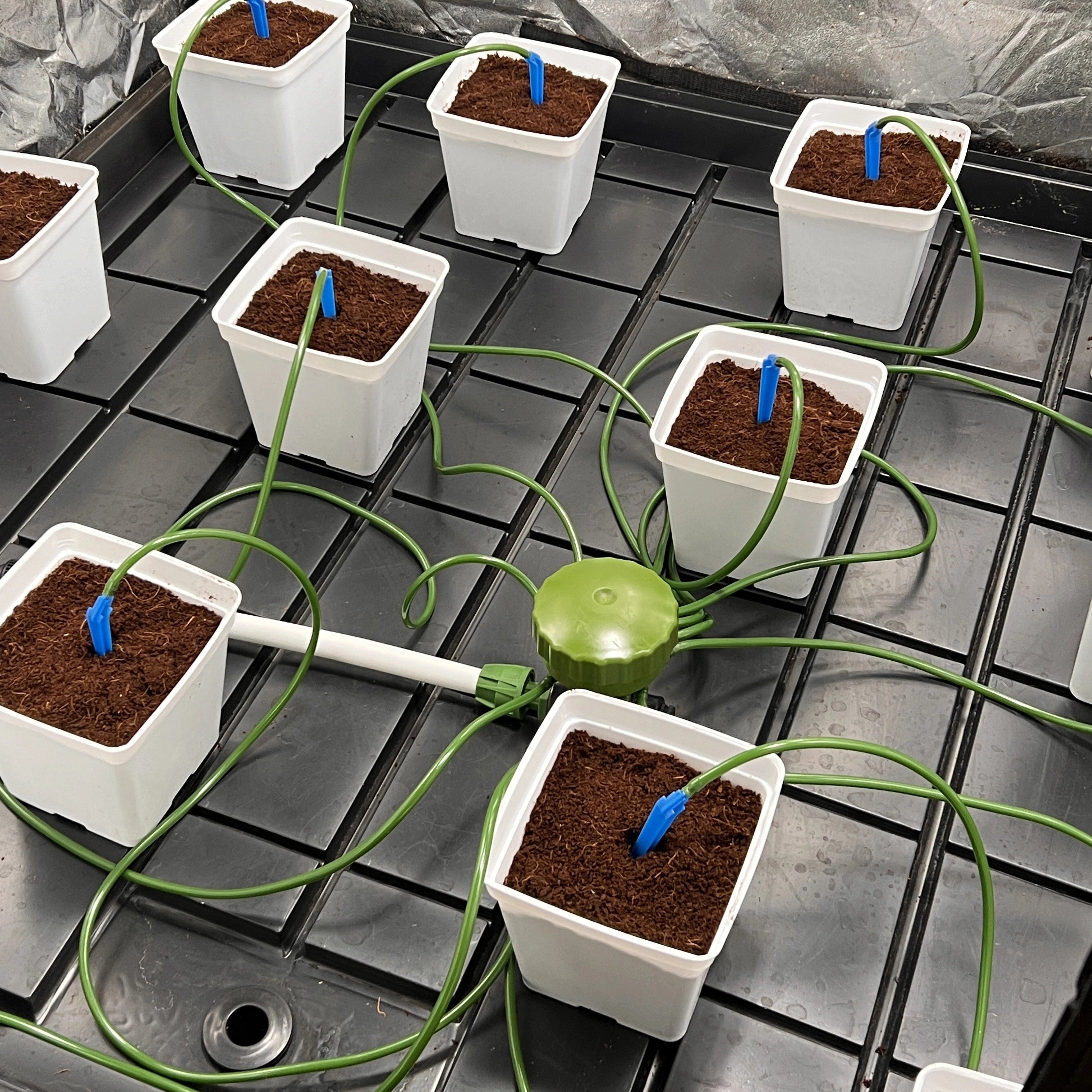
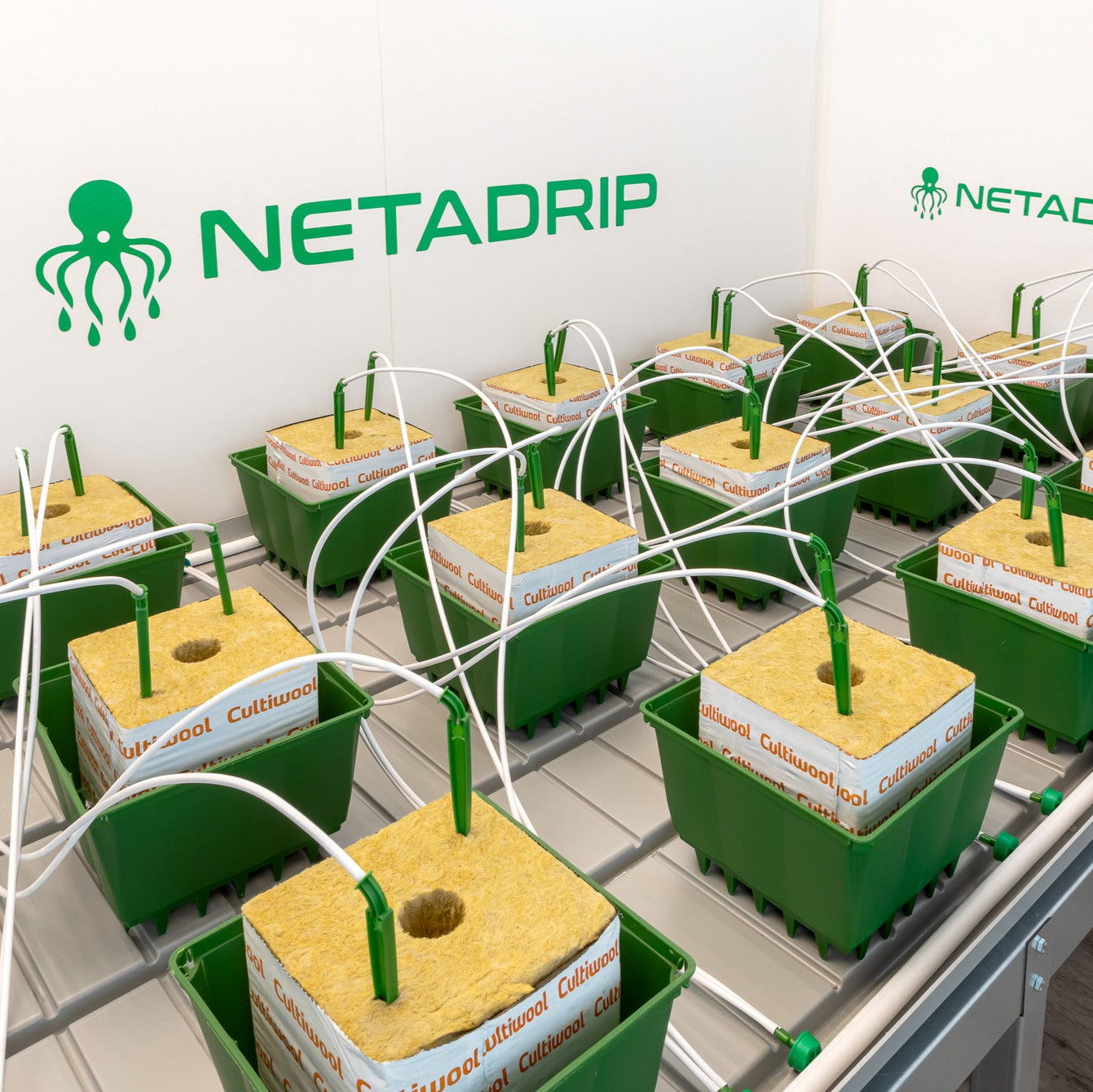
👉 The Netadrip Hydra Irrigation Kit is designed for coco-based cultivation systems that require uniform water distribution, stable flow rates, and precise irrigation control, making it easier to implement crop steering strategies without complicated installations.
Signs Your Crop Steering Strategy Is Working
When crop steering is applied correctly, plants typically respond quickly.
Common indicators include:
-
Faster plant response to irrigation adjustments
-
More controlled growth patterns
-
More uniform production across the crop
-
Improved flower structure and density
Crop steering is not about watering more.
It is about understanding what the plant needs at each stage of development.
Conclusion
Crop steering represents the next step for growers who already understand coco cultivation basics.
It does not replace proper irrigation practices — instead, it transforms irrigation into a strategic cultivation tool.
When irrigation stops being a routine task and becomes a cultivation strategy, coco substrate reveals its full potential as a high-performance growing medium.
If you want to dive deeper into these techniques, explore the complete coco cultivation guide developed by the Netadrip team.
📘 Download the Coco Growing Guide

Written by Netadrip Marketing